





The Summit
Now Playing
LOADING SONG
Pop Out Music Player
91.3 FM AKRON
90.7 FM YOUNGSTOWN
90.1 FM ATHENS
DONATE

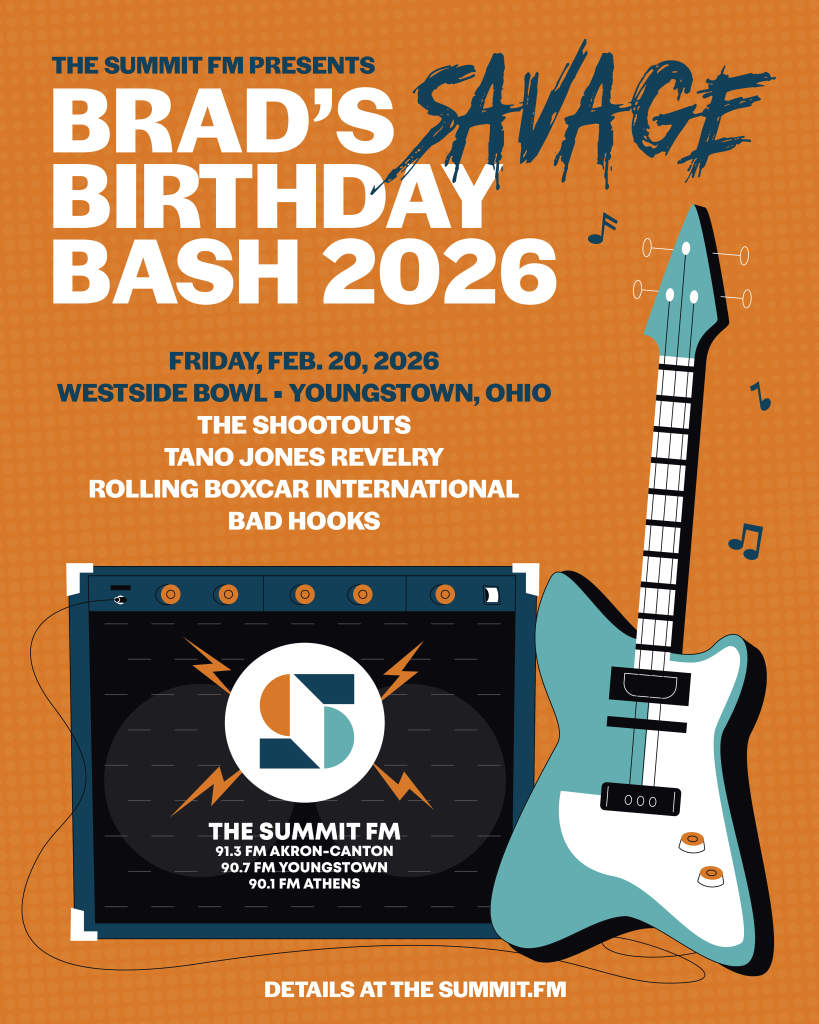
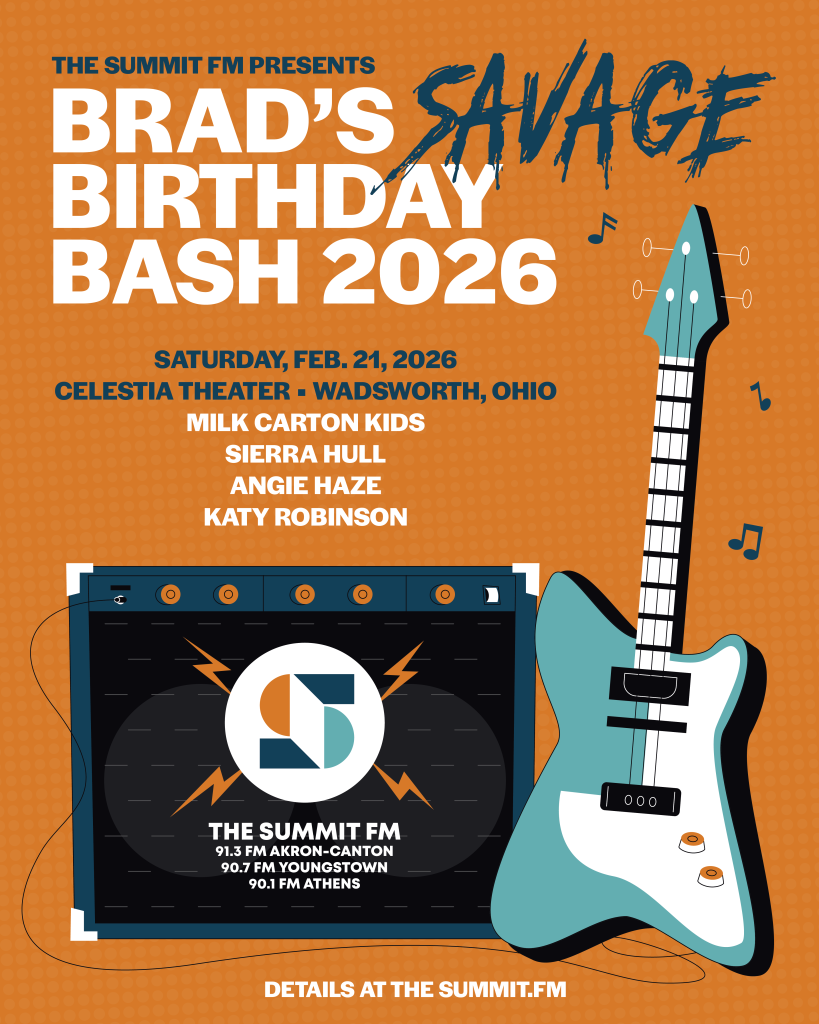
Brad’s Savage Birthday Bash is back for 2026, and The Summit FM is throwing two nights of live music to celebrate 🎉

Join us Friday, February 20 at Westside Bowl in Youngstown with performances from The Shootouts, Tano Jones Revelry, Rolling Boxcar International, and Bad Hooks, then keep the party rolling Saturday, February 21 at the Celestia Theater in Wadsworth featuring Milk Carton Kids, Sierra Hull, Angie Haze, and Katy Robinson.

Two cities, two nights, and a whole lot of Summit-approved music — it’s gonna be a savage good time.

Click the posters below for tickets!

NIGHT ONE
NIGHT TWO


Joseph Arthur week is here at The Summit FM!

🎧 Start with the deep dive: Below, you can check out our longform podcast recorded during Joseph’s last visit — a great look into his music and story.

📻 On-air Guest DJ: Joseph joins Brad Savage as a Guest DJ on Tues 11/25 from 4–6 PM.

🎶 Live performance this week: Joseph Arthur performs “Thanksgiving Eve” on Wed 11/26 at House 330. Don’t miss it! CLICK HERE FOR TICKETS

TheSummit-FM · Joseph Arthur The Summit FM deep dive interview

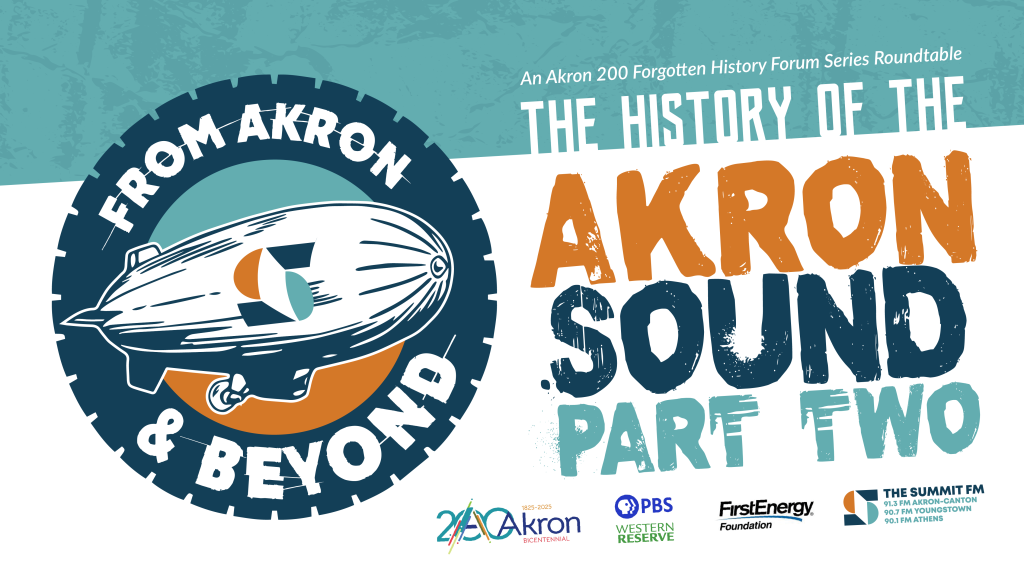
After a completely sold-out first installment, The Summit FM is thrilled to present The Akron 200 Forgotten History Forum Series: History of the Akron Sound Part Two, proudly presented in partnership with FirstEnergy Foundation, on Tuesday, October 14th at 6:00 PM at the Downtown Akron Library.

Join us as we dive even deeper into the stories, sounds, and impact of Akron’s groundbreaking music scene. This installment features an incredible panel including David Giffels, Bob Ethington (Unit 5), Deborah Cahan (Chi-Pig), Dave Swanson, Danny Basone, and more, hosted by Brad Savage, Summit FM Music and Program Director.

Together, we’ll explore the voices, venues, and vibes that shaped the Akron Sound and celebrate its influence both locally and far beyond. With so much more to discuss, Part Two promises fresh perspectives, unforgettable memories, and lively conversation honoring Akron’s musical legacy. Don’t miss your chance to be part of the discussion!

Free Admission! CLICK HERE TO REGISTER
Famed Akron Sound favorite Unit 5, live at the Bank - Akron, OH

🎶 A major milestone for The Summit FM’s Marilyn Stroud Music Alive program!

On October 6, Music Alive celebrated the donation of its 500th instrument — presented to Akron Public Schools during the school board meeting by Tommy Bruno, Laura Smiley, and Derek Jung.

This incredible achievement wouldn’t be possible without the generosity of our community and the continued partnership of Taylor Band & Orchestra, which refurbishes these instruments, allowing us to put them in the hands of students across Northeast Ohio.

Want to help us reach the next 500? 🎸🎺🎻 Donate an instrument to the Music Alive Program today and give the gift of music to a local student. 
Click Here For More Info on Music Alive

By Dave Swanson - Summit FM Contributor

Mellow Gold may have put him on the map, but it was Odelay that gave him control of the map! Released in June of 1996, it was Beck’s second major-label release. Songs like “Where It’s At,” “Devil’s Haircut,” and “The New Pollution” became staples on alternative radio and MTV, giving him firm footing in the precarious alt-rock terrain. “I thought Odelay might be the last time I got a chance to make a record,” he said in an interview looking back on the now-classic LP.

As mentioned, Mellow Gold was a huge knock on the door, especially with the song “Loser,” which turned him into the poster boy for the so-called “slacker” generation. He followed that with the indie-label release One Foot in the Grave,an acoustic album inspired by artists like Skip James and The Carter Family. Rooted in country, folk, and blues, it showed a different side of Beck and helped kick the gate open wider after “Loser.” That set the stage for Odelay, where he fully melded vintage styles with the modern to create his own musical world.

The album became a catch-all template, pulling in folk, blues, hip-hop, soul, garage rock, pop, and electronic influences. Had he leaned too hard in any one direction, it might have collapsed under its own weight. Instead, Beck struck the right balance, and audience interest only grew. Still, he admitted he wasn’t sure at first. “I thought at the very best, it would come out. It would be a big flop,” he told American Songwriter magazine. “But in 20 years, a bunch of weirdos would find it and go, ‘Oh, this record was cool,’ because it wasn’t the obvious commercial follow-up.”

Even fans inside the industry assumed Beck would be a one-hit wonder, with “Loser” capturing a moment in time before he moved on. Odelay was his chance to prove them wrong. Despite his insecurities, he pressed forward with producers the Dust Brothers, who turned out to be the perfect match. They not only realized Beck’s off-center musical ideas but added their own. Beck would later say it was the perfect team for that album—and the proof is in the songs.

It certainly didn’t hurt that “Devil’s Haircut” borrowed the main riff from the Them classic “I Can Only Give You Everything.” That instantly grabbed attention, but once the riff fades, the song transforms into something else entirely. Vintage guitars give way to a heavy modern rhythm before the riff reappears, topped off with some snotty vocals. Perfect.

“Where It’s At” merged vintage soul with hip-hop, playing both sides against each other to become an MTV favorite and a signature Beck track. Meanwhile, “The New Pollution” carried an underground pop vibe that pulled together references from the ’60s, ’70s, and ’80s in one smooth sweep. Much of the album feels rooted in its era, yet even approaching its 30th anniversary, it avoids sounding dated in the way so many records do.

Odelay charted respectably, hitting No. 16. It racked up countless “album of the year” accolades from critics and went on to sell millions. To this day, it remains his most significant album in a career that has never stopped surprising.

By Summit FM Contributor Matt Anthony

"People ask me what I do in the winter when there's no baseball. I'll tell you what I do. I stare out the window and wait for spring."  

- Rogers Hornsby 

I had an innate confirmation, early in my youth, that it was the best game ever invented. 

While standing in the outfield during a pick-up game (an event, sadly, that’s been replaced by soccer, video-games, and web-surfing), I experienced a sudden rush of warm certainty, where every nuance in the universe was rendered wonderfully in balance, simply by virtue of the sound that was produced when a wooden bat struck a ball, a glorious crack that pierced the humid air and set all things that were proper in to motion. 

Baseball was perfect. 

It was played at a perfect time of year. It had perfect sounds. It had perfect smells, the way a leather glove mixed with soil and sweat. (I lost count of the number of times I stood in the outfield or crouched behind the plate, between pitches, and covered my nose and mouth with my glove, just to inhale that glorious combination.) 

And it had perfect rules. The fact that you could run past first base, and not be ‘out’, but you couldn’t do the same on second base or third base, was strange and extraordinary and…brilliant. 

I’m grateful that my father, a catcher (who was actually ‘called up’ to the Pittsburgh Pirates twice, for weekend series’ against both the Dodgers and the Reds), groomed my twin, Mark, and me early. Soft toss, grounders, and, later, flyballs. (we called them ‘high-flies’.) He’d feed us whiffle-ball pitches in the backyard, and I can still recall his directives of ‘step into it’ and ‘turn your wrists’. 

And that feeling. Nothing since then has replicated the transformative experience of moving a bat through the hitting-zone and meeting a baseball at full impact. To be able to simply watch that white projectile climb through the blue stratosphere while your forearms tingled under dirt and perspiration was sheer bliss. As a youth, that addiction kept me awake at night, where I would I would struggle to doze off while counting the minutes until we could ride our bicycles up to the dusty ballfield and do it again the next day. 

"I am convinced that God wanted me to be a baseball player."  

- Roberto Clemente 

Sure, football and basketball were spectacular sports, filled with athletic displays of power and dexterity. (And later in life, I would profess a love-affair for tennis and racquetball.) However, to me, they resembled war and battle, teams of opposing forces crashing into each other, jostling for position under the hoop or in the end zone. 

Baseball was a chess match, operating every pitch under the celestial, watchful eye of the storied legends who went before me, nudging me and, at the same time, taunting me to work on my craft so that I could one day approach the prolific numbers that they set as a barometer for all of us, used as both a mentor, and, yes, a target. 

Sitting in my hunched position, calling for a pitch, with a suspicious eye on that runner at first, I tried to guess what he was thinking about me. Would I feign a throw to first while he took a lead? Would I call a pitch-out? Would I thrust myself out of my crouch as he raced for second, flip my mask towards the dugout, and unleash a laser to the bag, narrowly beating him as the umpire threw his thumb into the wind? 

While at the plate, wagging my bat back and forth ensconced in testosterone, my gaze fixated on the mound, I’d wait for the pitcher’s choice, quickly stealing a glance far away at my father, sitting in his lawn-chair, a dot on the horizon hundreds of feet away from the action beyond the center-field fence, where he always sat, telling myself over and over to ‘step in to it’ and to ‘turn my wrists’. 

To this day, I can still conjure up the memory of sending that pitch into the gap in left-center, sprinting towards first, my husky frame not moving nearly as quickly as I wanted it to. I can still hear my batting helmet jostling from side to side, its plastic interior bouncing off each side of my duct-taped eyeglasses while the first-base coach made wide, circular motions with his left hand, imploring me to increase my gait towards second base. 

And it’s as clear as a bell, the memory of that triumphant stop at second, standing on the bag with both feet, hands on hips, huffing, puffing, surrounded by a dissipating cloud of brown dirt and the sounds of teammates clapping. 

I remember this time as though it happened just yesterday. It’s why I sometimes drive over to that northwest end of Canton, Ohio, to what was once Mulheisen Field, to ‘Field #2’, the same field that served as a backdrop to the above photo.  It’s the diamond where my twin brother, Mark, and I represented the Harrison Paints White Sox, proudly wearing the cotton white uniforms with the red trim, of the Canton Mighty-Mites League. 

Home plate. 40*.49”27.0366’. 81*.22”10.1922’.  

It’s also the exact latitude and longitude where I’ve designated my ashes to be spread. 

"A hot dog at the game beats roast beef at the Ritz."  

- Humphrey Bogart 

Because ‘baseball’ has always been there for me. My father taught it to us. I followed it. I caressed it. I got angry with it, despondent with it, and beat up by it. When I left it briefly, it patiently waited for me to return. Ken Burns brought me back. And so did Jim Thome. And I even had the opportunity to celebrate it as the church for my wedding day, when Donna and I tied the knot at home plate at Thurman Munson Stadium, on August 13th, 1999. 

Who invented it? Abner Doubleday? Alexander Cartwright? Doesn’t matter. Beyond the stats and the new stadiums and multi-million dollar contracts. Aside from the pitch-clocks and the ghost-runners and the incessant need to speed up the most natural pastime on the planet, baseball is still….perfect. Like, a ‘game-of-catch’ perfect. 

crossmenu linkedin facebook pinterest youtube rss twitter instagram facebook-blank rss-blank linkedin-blank pinterest youtube twitter instagram